
McLean, VA · Garage Door Service
Garage Door Panel Replacement for Pimmit Hills Homes
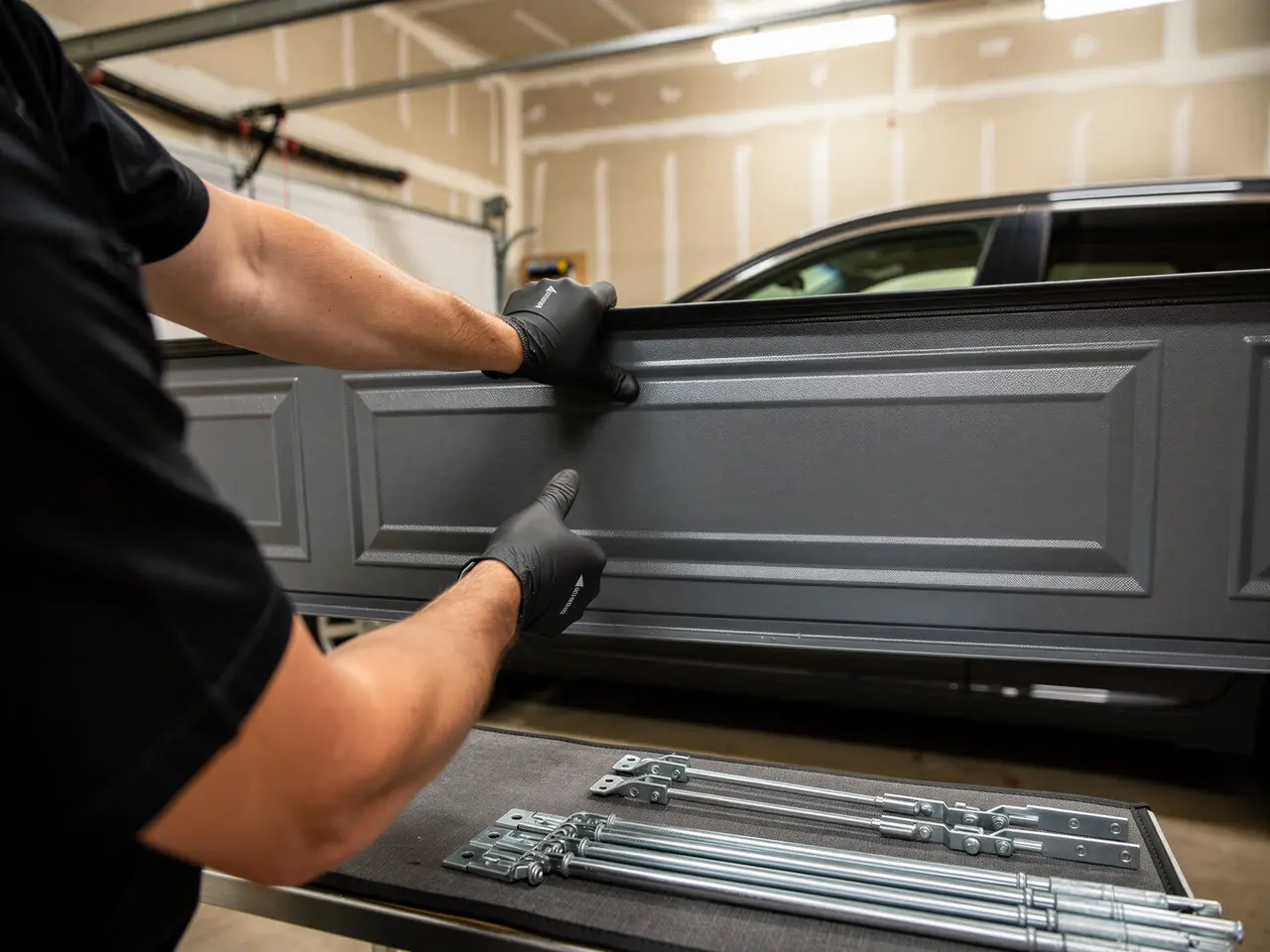
Panel replacement for Pimmit Hills homes built around 1966, two miles from our McLean shop. We match hardware to the door you actually have, not a catalog guess.
- Repairs & new doors
- Springs & openers
- Serving 5 nearby communities
Why This Fails Locally
Pimmit Hills sits two miles from our shop in McLean, which sounds like nothing until you're the one standing in a driveway trying to match a panel to a door nobody's made in decades. The short drive means we're not guessing at what we'll find when we get there - most houses in this part of the service area went up around 1966, which puts them square in the middle of the 1940-to-2015 build range we work across, but on the earlier end of it. That matters because a door from 1966 almost never has the same panel profile, hinge spacing, or steel gauge as something installed in the 2000s. Order the wrong panel off a general parts list and it won't sit flush, won't seal against the cold the way the rest of the door does, and will throw the whole balance off the springs.
This area also sits in a cold-and-severe climate band, which is a bigger deal for panel replacement than most people expect. Steel panels from the 1960s don't have the same thermal break or insulation core that current panels do, so a mismatched replacement panel can create a cold spot that sweats, rusts the track side, and ages the rest of the door faster than the original panel did. We measure before we quote, every time, because the two-mile trip doesn't save anyone anything if we show up with the wrong part.
Doing It Yourself
You can swap a single panel yourself if the door is unlocked from the opener, the track is undamaged, and you've got the right fasteners for a panel built to a 1960s spec rather than a current one - those two things don't always use the same hardware, and that's the detail that trips people up. Pulling the old panel is usually the easy part. Finding a replacement that actually matches the section height and the hinge pattern of a door this age is the part that eats a weekend.
We'll say the honest thing here: if your door is original to a house built around 1966, we may not be able to get an exact factory match. Panel manufacturers don't keep that tooling running forever, and once a line's discontinued, you're choosing between a close match that we can source and a full door replacement that solves the mismatch problem for good. We'll tell you straight which one makes sense for your door rather than selling you a panel that'll look slightly off for the next fifteen years.
If you do attempt it yourself, don't touch the spring side of a double door - a panel swap on a torsion system means the cables stay under load the whole time, and that's not a DIY-safe situation no matter how handy you are.
Where This Job Goes Sideways
The most common mistake we see on panel jobs in this part of the service area is ordering a panel by width and height alone. A door built around 1966 often has a narrower rail spacing and a different roller track offset than a door built even ten years later, so a panel that's technically the right size can still bind against the track or sit proud of the others by a quarter inch - enough to catch wind and work loose over a winter.
The second way it goes sideways: insulation mismatch. An original steel panel from this era is single-wall, no foam core. Replace just one panel with a modern insulated section and you get a door with one section that flexes differently than the rest under temperature swings - which, in a cold-and-severe climate, means that panel ages and dents faster than its neighbors.
Third, and this one's avoidable with a five-minute check: the opener's travel limits get set for the door's current panel stack. Change the thickness of even one panel and the door may not close all the way, or the opener will think it's closed when it isn't. We reset limits as part of every panel job - it's a small step that gets skipped a lot.
How It Shows Up
On a door with a section built around the mid-1960s era, panel failure usually shows up as a dent that's cracked rather than just bent - the steel's thinner and doesn't flex back the way newer stock does. You'll also see rust blooming along the bottom edge of a panel before anywhere else, especially on the side that catches more weather.
Another sign: the door starts binding at one spot in the track every time it opens, always the same spot. That's usually a warped panel pulling the roller off its line, not a track problem at all, and it's worth catching before it wears the roller itself. If a panel's been hit - a car bumper, a dropped ladder - the obvious dent is the least of it; check the track alignment on that side before you run the door again.
Booking a Visit
We cover Pimmit Hills out of our McLean location, about two miles away, so there's no local branch to call - the truck comes from the shop. If the issue isn't just a panel but something with the spring, opener, or a door that's stuck entirely, our Pimmit Hills garage door repair page covers that broader range of work. For the general rundown of how we handle panel jobs across the wider service area, see the McLean panel replacement page.
Parts We Carry
For homes in the 1966-ish build range common to this area, we carry a stock of standard steel panels sized for the older rail spacing, plus the matching hinges and fasteners that current big-box panels don't come with. We don't stock an exact factory match for every discontinued profile - nobody does - but we can usually get close enough that the seam lines and shadow gaps match the rest of the door. For households weighing a full door swap instead, we'll walk you through it honestly rather than pushing a patch that won't hold.
Frequently asked questions
Will a new panel match my old door if my house was built in the 1960s?
Not always exactly. Panel profiles and hinge spacing from that era are often discontinued, so we look for the closest match we can source and tell you upfront if it won't be a perfect factory match. Sometimes a full door replacement makes more sense than chasing an exact match on one panel.
How far out is Pimmit Hills from your shop?
About two miles from our McLean location. We don't keep a separate branch in Pimmit Hills - the truck comes from McLean for every job, panel replacement included.
Can I replace just one panel instead of the whole door?
Often yes, if the track and opener are in good shape and we can source a panel close to your door's original size and hinge pattern. On older doors with discontinued profiles, a single-panel swap sometimes isn't worth it compared to replacing the whole door.
Why does my door bind in the same spot every time it opens?
That's usually a warped or dented panel pulling the roller off its track line at that point, not a track fault. It's worth fixing before the roller itself wears out from the misalignment.
More garage door services in Pimmit Hills
Book garage door service in McLean
Call now or request a quote - tell us what the door is doing and where you are.