
McLean, VA · Garage Door Service
Garage Door Installation Built for McLean's Older Openings
Garage door installation in McLean sized to the 1960s-70s rough openings common here, built for a severe cold climate. Local crew, straight talk on timing.
- Repairs & new doors
- Springs & openers
- Serving 5 nearby communities
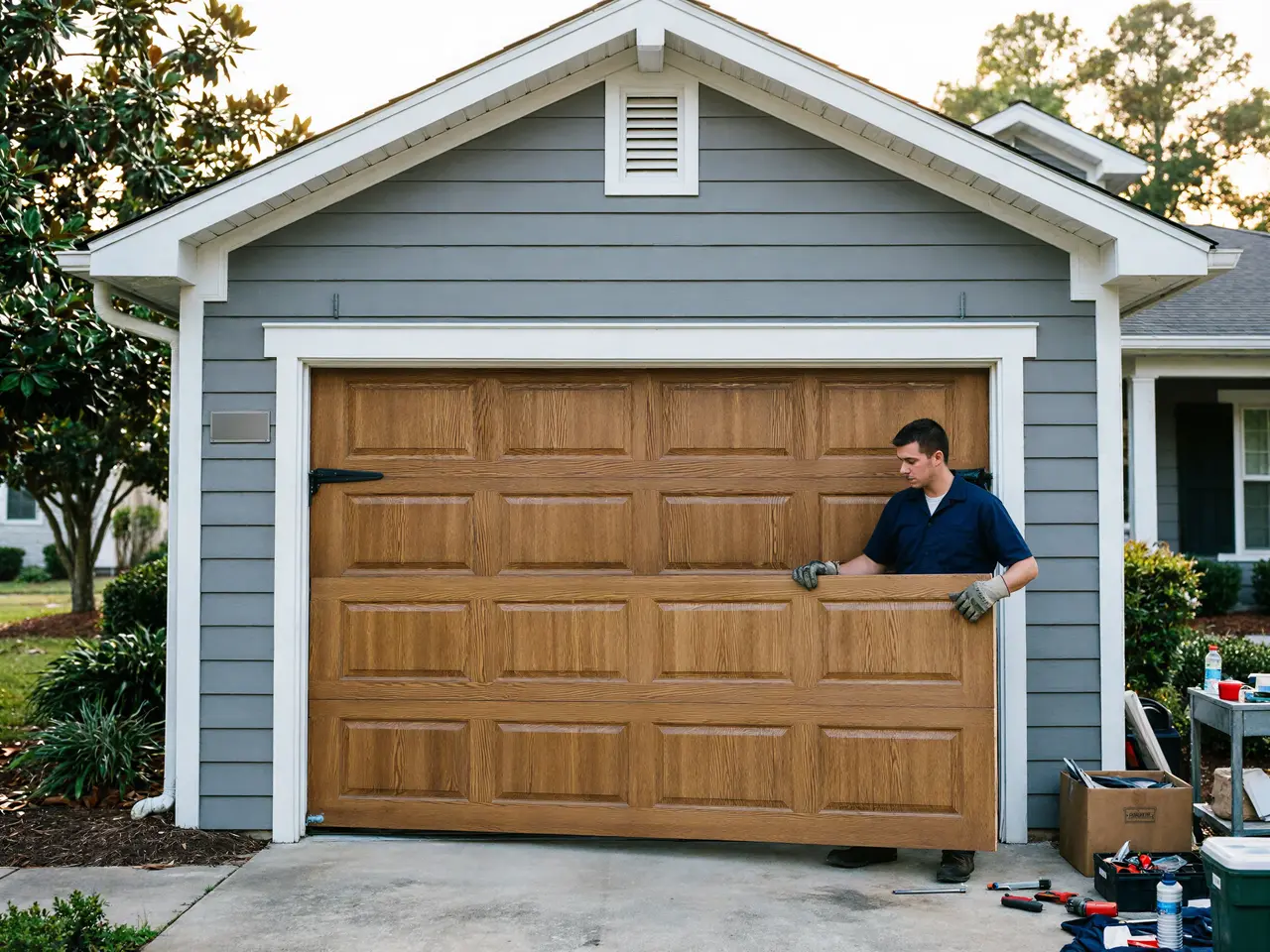
What the Fix Involves
A proper installation starts with the opening, not the door. In McLean, most homes went up between 1940 and 2015, with the bulk of that stock dating to the 1960s and 70s across the 41 named areas that make up this service area. Openings framed in that period rarely match today's standard door widths and header heights, so we measure the jamb, header clearance, and floor slope before we order anything. We check whether the existing track is a standard-lift or a low-headroom setup, since a lot of these older garages were framed before low-headroom hardware was common.
From there, the job covers removing the old door and track, setting new vertical and horizontal track, installing springs sized to the door's actual weight (not a generic chart number), hanging the panels, and setting the opener travel limits. If the header isn't tall enough for standard track, we install a low-headroom kit instead of forcing a door that won't clear. We also seal the bottom and sides against the climate here - more on that below. We don't do cosmetic trim or siding repair around the opening; that's a separate trade and we'll tell you if you need it before we start.
Why This Fails Locally
McLean sits in a severe cold climate band, and that matters more for installation than people expect. Steel panels and seals that aren't rated for hard freeze-thaw cycles will shrink, crack at the corners, or lose their seal within a few winters - we see it on doors that were installed with builder-grade weatherstripping meant for a milder zone. On a median housing stock dating to 1977, a lot of openings have also shifted slightly from decades of frost heave under the slab, so a door that was square when it went in forty years ago often isn't square now.
That combination - older framing plus hard winters - is why a stock door bought off a shelf without a site measurement tends to fail early here. Panels bind on one side, bottom seals tear on an uneven slab, and torsion springs sized for a lighter door wear out fast under the extra drag. We size the spring to the door and the opening we actually find, not to a catalog average, because the catalog average assumes framing and weather this area doesn't have.
How It Shows Up
On houses from the 1960s-70s wave that make up most of this market, the giveaway is usually a door that drags on one side of the track or won't seat flush at the bottom - both point to an opening that's moved slightly out of square over fifty-plus years. In winter, homeowners also notice a wide gap at the bottom corners where the old seal has split, letting cold air and runoff into the garage.
On newer construction in the area, closer to the 2015 end of the housing range, the complaint is different: the opener runs but the door doesn't come down evenly, usually because the original installer didn't level the track to the slab pitch. Either way, a door that looks fine standing still but fights the opener under load is telling you the track or spring, not the panel, needs attention - and that's an installation or re-set issue, not a cosmetic one.
Time on the Job
A standard single or double door swap on a house with a normal-height header runs most of a day once the new door is on site - removal, track, springs, panel hang, and opener calibration. Low-headroom installs and custom widths for non-standard older openings take longer because the hardware has to be fitted piece by piece rather than dropped in as a kit.
Here's the honest limitation: if your opening needs a custom-width door - common in this area given how much of the housing dates to before current standard sizing - that door isn't something we keep on the truck. It has to be ordered, and lead times on non-standard sizes run longer than a stock door. We'll give you a real date once we've measured, not a guess before we've seen the opening.
Frequently asked questions
Why doesn't a standard-size door fit my garage in McLean?
A lot of McLean's housing was built in the 1960s and 70s, before today's standard door widths and header heights were common. If your opening was framed to an older spec, a stock door may not clear the header or fit the jamb without a low-headroom kit or a custom width, which we confirm by measuring on site.
Will a new door actually stop winter drafts in my garage?
A properly sealed install helps a lot, since this area sits in a severe cold climate band where cheap seals crack within a few seasons. The bottom seal, side weatherstripping, and panel insulation all matter more here than in a milder zone, so we spec materials rated for hard freeze-thaw, not builder-grade minimums.
How long does a full garage door installation take?
A standard single or double door on a normal header usually takes most of one day, start to finish. Low-headroom setups or custom-width doors, which are more common on older McLean openings, take longer because the hardware is fitted by hand rather than installed as a pre-sized kit.
Can you install the same day you measure?
Not if your opening needs a non-standard width or a low-headroom kit, which is common given how much of the local housing predates current standard sizing. Those doors have to be ordered. We'll measure first and give you an honest delivery and install date rather than promise same-day work we can't back up.
Book garage door service in McLean
Call now or request a quote - tell us what the door is doing and where you are.