
McLean, VA · Garage Door Service
Is Your McLean Garage Door Worth Fixing, or Time to Replace
McLean homes built from the 1960s through the 1970s carry original hardware that cold winters stress hard. Here's how to judge repair versus replacement on these doors.
- Repairs & new doors
- Springs & openers
- Serving 5 nearby communities
What Local Conditions Do
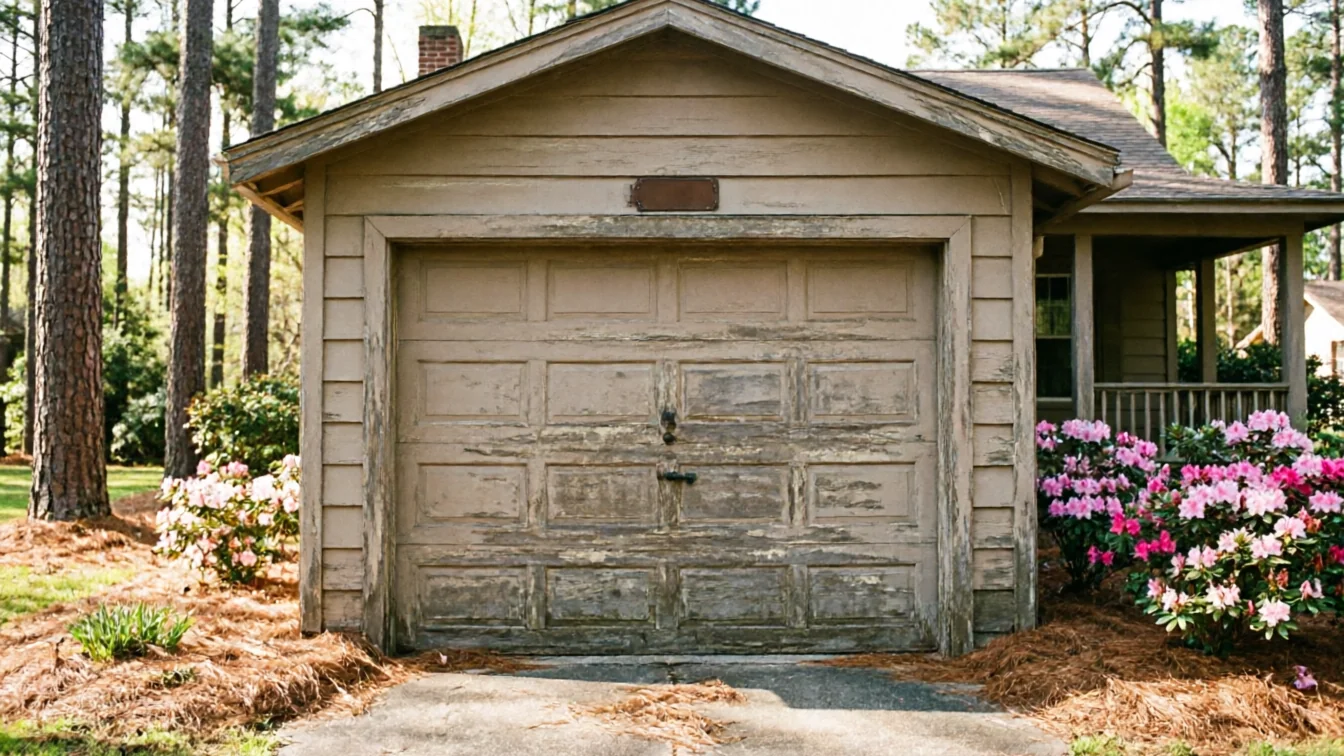
Most of the houses around McLean and the nearby pockets of West McLean and Pimmit Hills went up between the 1940s and 2015, with the bulk of that stock dating to the 1960s and '70s. A door installed when the house was built is now pushing fifty or sixty years old, and the hardware on it was never designed for the cold-climate stress this area gets most winters. Steel panels contract in sustained cold, and the torsion springs and cables on an original setup lose tension faster when temperatures swing hard overnight, which this region does regularly. On a 1960s or '70s door, that means the galvanized cable is likely original, the spring has seen decades of winter cycling it wasn't rated for past year twenty or so, and the track alignment has probably drifted out of true from seasonal expansion and contraction. None of that is a flaw in the door itself. It's just what forty or fifty cold-winter cycles do to steel and lubricant. The practical effect: a door that looks fine in September can bind, groan, or drop a panel the first hard freeze of the year. If your house falls into that 1960s-70s build window that covers most of this area, assume the original hardware is closer to the end of its working life than the middle.
When Waiting Is Fine
Not every noise or slow spot means the door is failing. A door that's a little stiff on cold mornings but closes level and doesn't bind partway through the cycle is usually just dealing with grease that's gone tacky in the cold, which is common on homes built in that 1960s-70s range around here. If the door opens and closes smoothly most of the year and only acts up on the coldest days, that's a lubrication and adjustment issue, not a structural one. A door with one noisy roller, a slightly loose bracket, or a weatherstrip that's gone brittle is also fine to leave alone for now. These are wear items, not failure points, and replacing the whole door over them is overkill. The honest line here: cosmetic wear and seasonal stiffness on an otherwise-working door almost never justifies a full replacement. Fix the part, not the door.
When It Stops Being a DIY Job
Once a torsion spring lets go on a door this age, that's not a weekend project. The spring is holding the full weight of the door under tension, and on original 1960s-70s hardware, the mounting and cable routing often don't match what's sold off the shelf today. A door that's dropped unevenly, a cable that's frayed, or a track that's bent from a slipped roller all mean the door is no longer safe to run, let alone adjust yourself. If you're hearing a loud bang from the spring area or the door won't stay up on its own, stop using it and get it looked at. That's the line between a tune-up and a repair call.
The Situation
Across the area - from Pimmit Hills and Tysons a couple miles out to Falls Church and Dunn Loring a few miles further - the housing stock skews heavily toward that 1960s-70s build era, so a lot of these repair calls look alike: original springs at the end of their life, tracks that have drifted with decades of cold-weather cycling, and openers that are original to the house. Given the median household income in this service area runs well above the regional average, a lot of owners here default to replacement without checking whether the door itself is sound - and often the door is fine, it's the spring or opener that failed. One honest limitation: if the door panel itself is dented, rusted through, or warped, no amount of spring or cable work fixes that, and replacement is the right call. But a structurally sound door with failed hardware is almost always cheaper to repair than replace, even on an older McLean house.
Frequently asked questions
My garage door is original to a 1960s McLean house. Is it too old to repair?
Age alone doesn't disqualify it. If the panels are straight and not rusted through, the spring, cables, and rollers can usually be replaced without touching the door itself. The panel steel on these older doors tends to outlast the moving hardware by a wide margin.
Why does my door act up specifically in cold weather?
Cold makes steel contract and grease thicken, which is harder on original hardware that's already decades into its service life. Homes built in the 1960s-70s stock common around here often have torsion springs and cables that were never rated for this many winter cycles, so cold exposes weak points first.
Should I replace the whole door if the spring breaks?
Not usually. A broken spring is a hardware failure, not a door failure. Unless the panels themselves are damaged or badly rusted, replacing just the spring and inspecting the cables and track is the cheaper, sound option on most older doors in this area.
Related garage door services in McLean
More garage door guides
Book garage door service in McLean
Call now or request a quote - tell us what the door is doing and where you are.