
McLean, VA · Garage Door Service
Garage Doors Built Before the Insulation Code Era in McLean
McLean's older garage doors predate modern insulation rules, leaving homes exposed to severe cold. Here's when repair works and when replacement is worth it.
- Repairs & new doors
- Springs & openers
- Serving 5 nearby communities
What Local Conditions Do
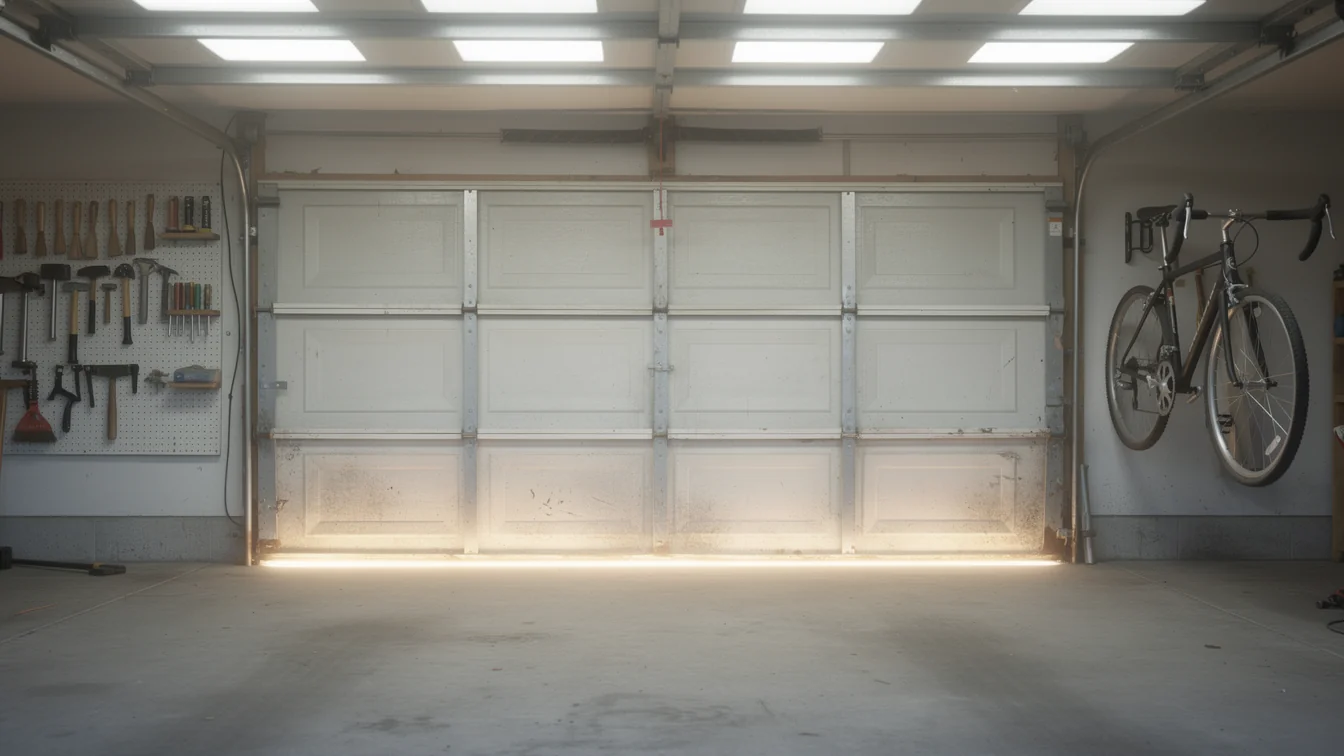
Most of the housing stock around McLean went up between 1940 and 2015, with the median build year landing at 1977 and the bulk of it concentrated in the 1960s and 70s. That window matters because it sits before the energy codes that eventually required insulated garage door panels as standard. A lot of original or early-replacement doors in this area are single-skin steel - no foam core, no thermal break, just a sheet of metal between the garage and the outside air.
Pair that with a climate the federal data classifies as severe cold, and you get a specific, recurring problem: steel contracts in winter. Panels that were a loose fit in August bind in January. Weatherstripping that was fine at installation hardens and cracks after a few freeze-thaw cycles. None of this is damage in the sense of something breaking - it's the material doing what uninsulated steel does in a cold climate once it's a few decades old. If your door is original to a house built in that 1960s-70s band, this is the baseline condition, not an anomaly.
When Waiting Is Fine
A door that's slow to close on a cold morning, or that whistles a little at the bottom seal, doesn't need a service call. That's the steel and the rubber responding to temperature, which is expected on an uninsulated panel in a severe-cold climate. If the door still opens fully, closes flush, and the opener isn't straining or reversing, you're looking at a comfort issue, not a mechanical one.
Same goes for a door that feels colder to the touch than an insulated model would - that's physics, not failure. If you're not using the garage as conditioned space, the energy loss from an old single-skin door is a minor line item, not an emergency. Houses from that 1960s-70s era were built to a different standard, and a door that's performing exactly as designed fifty-plus years ago doesn't need to be treated like it's failing today. Wait on this one until something actually changes - binding that wasn't there before, a panel that's started to bow, or hardware that's visibly loose.
When It Stops Being a DIY Job
Cold makes torsion springs behave differently than they do in summer - they're stiffer, and a spring that's already fatigued from decades of cycling on an old door is more likely to let go hard in a severe-cold stretch than ease into failure. If your door dates to that 1960s-70s build window and the spring has never been replaced, that's not a WD-40 fix. Springs under tension, especially cold-stiffened ones on original hardware, are where a homeowner ends up in the ER rather than back in the garage.
Track misalignment is the other one. On a 50-year-old door, cold-season metal contraction can shift a track just enough that the door starts riding rough, and forcing it past that point with the opener running tends to tear the bottom bracket loose. If the door is sticking, reversing, or making a new noise on an old single-skin panel, that's a call, not a weekend project.
The Situation
McLean's immediate surroundings - Pimmit Hills and Tysons two miles out, Idylwood, Dunn Loring, and Falls Church at four, West Falls Church and Wolf Trap at five - share the same general building era, mostly 1960s and 70s construction. That means the insulation gap isn't a McLean-only quirk; it's a feature of the whole inner-suburban ring built before current door codes existed.
With a median household income of $143,796 across the service area and 95,421 owner-occupied houses among 267,392 households, a straight swap to an insulated door is a cost most owners here can plan for rather than avoid. We don't do whole-house insulation retrofits - that's a different trade - but swapping an old single-skin panel for an insulated one is squarely in scope, and on a house from that 1960s-70s window, it's usually the single biggest upgrade available at the garage door level.
Frequently asked questions
Is my garage door actually uninsulated, or just old?
If your house was built in the 1960s or 70s, which covers most of the area, there's a good chance the original or early-replacement door is single-skin steel with no foam backing. You can usually tell by weight - insulated doors are noticeably heavier - or by checking if the panel sounds hollow when tapped.
Does cold weather actually damage an old garage door?
Cold doesn't damage steel outright, but it stiffens springs, hardens weatherstripping, and shrinks metal just enough to change how a decades-old door sits in its track. On a door from the 1960s-70s era that's never been serviced, severe cold is usually what exposes wear that was already there.
Should I replace the whole door or just add insulation to the panels?
Retrofitting insulation onto an original single-skin door is possible but rarely worth it on a door that old - the hardware and track are usually due for replacement anyway. Full replacement with an insulated door is the more common call on houses from that build era.
How urgent is a stiff spring in winter?
More urgent than in summer. A fatigued torsion spring on an old door is already near the end of its life, and cold stiffens the steel enough that it's more likely to fail suddenly rather than gradually. That's not a repair to put off.
Related garage door services in McLean
More garage door guides
Book garage door service in McLean
Call now or request a quote - tell us what the door is doing and where you are.