
McLean, VA · Garage Door Service
Why Garage Door Safety Sensors Drift Out of Alignment in McLean Homes
Garage door safety sensors in McLean drift for reasons tied to this area's 1960s-70s housing stock and cold winters. Here's what moves the brackets and when to call someone.
- Repairs & new doors
- Springs & openers
- Serving 5 nearby communities
What Local Conditions Do
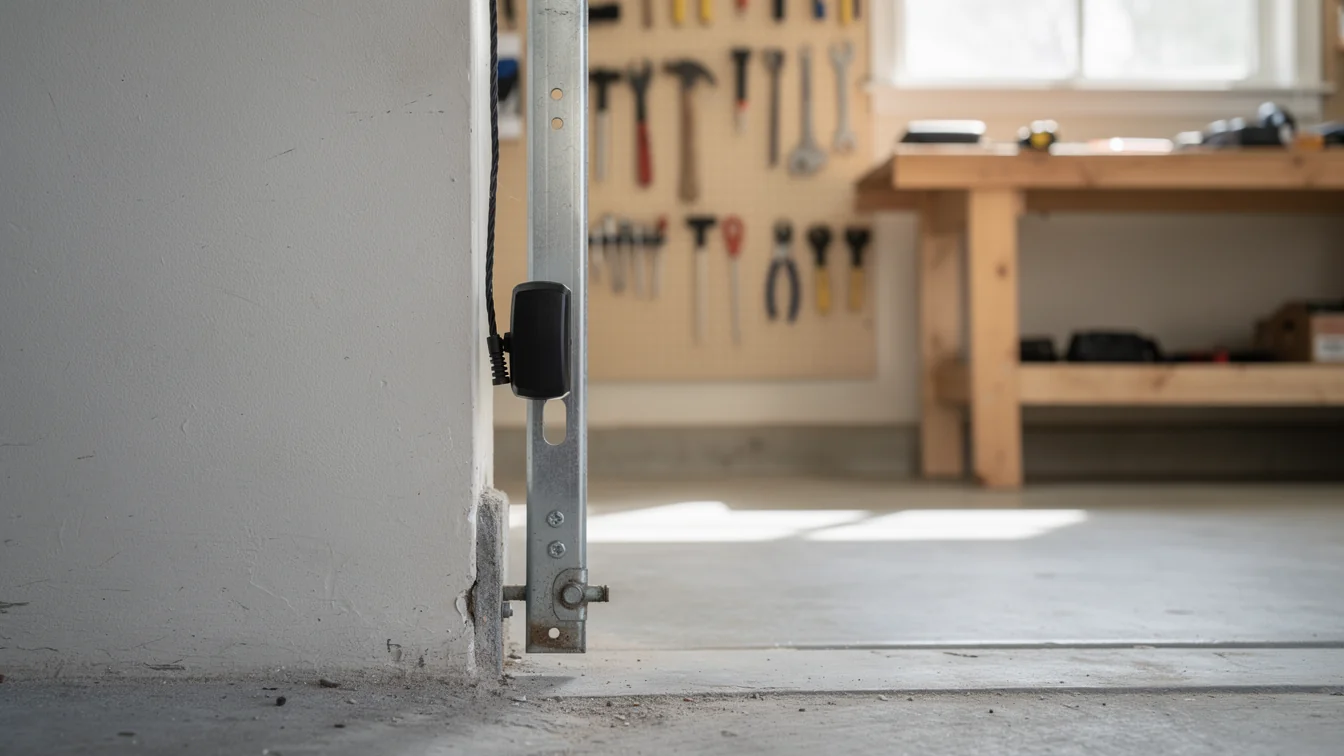
Most of the housing across this service area, from Pimmit Hills to Tysons to the 41 named neighborhoods in between, went up between 1940 and 2015 with a median build year around 1977. That matters for sensor alignment more than people expect, because the photo-eye brackets on these doors are usually mounted to the original wood jamb or a concrete slab apron poured back then, not to anything designed with sensor hardware in mind.
This area sits in a cold climate band with severe winters, and that's the other half of the story. Freeze-thaw cycles work on concrete slabs over decades, tilting the apron a few degrees here and there. Wood jambs shrink and swell with humidity swings season to season. Either way, the two sensor eyes that have to line up within a few degrees of each other slowly stop lining up. Nobody bumped anything. The house just moved under them, the way houses built in the 60s and 70s in this part of Virginia tend to after forty-plus years of winters.
A sensor that was dead-on in June can start blinking by January, and it's rarely the sensor's fault. It's the structure it's bolted to.
/
When Waiting Is Fine
If the door still closes all the way and the sensor light only flickers occasionally, especially right after a cold snap, that's not an emergency. Wipe both lenses with a dry cloth first; dust and cobwebs cause more false alarms than actual misalignment ever does. If the light is solid but dim, check that nothing in the driveway (a trash can, a parked bike) is breaking the beam.
You can also try loosening the wing nut on each bracket and nudging the sensor by hand until both lights read solid, then retighten. On houses from this era, a quarter-inch adjustment is usually all it takes, since the drift tends to be gradual rather than sudden. If the door opens and closes normally and reverses correctly when you wave something through the beam, you're fine to leave it alone and just keep an eye on it through the rest of winter.
The one thing not to do is disconnect or bypass the sensors because they're being fussy. They're doing their job. A door that reverses on a false trigger is annoying. A door that doesn't reverse on a real one is the opposite kind of problem.
When It Stops Being a DIY Job
If the bracket itself has visibly bent, cracked, or pulled loose from a slab that's spalled around the anchor, hand adjustment won't hold. Concrete this age chips when you try to re-anchor into the same hole, and a wobbly bracket will drift right back within a season.
Same goes for wiring. Houses built in the 60s and 70s sometimes have sensor runs that were added later, spliced into whatever was convenient at the time, and decades of cold-weather contraction and expansion on those splices causes intermittent faults that look like misalignment but aren't. If you've re-aimed the sensors twice and the fault keeps coming back within days, that's a wiring problem, not an aiming problem, and it's worth having someone trace it rather than keep adjusting a bracket that isn't the issue.
Here's the honest limit: we don't stock every bracket style used on garage doors from this build era, since manufacturers changed mounting hardware more than once over those decades. Some jobs need a part ordered before we can finish the fix, and we'll tell you that up front rather than force a bracket that doesn't fit.
The Situation
This service area runs from Pimmit Hills and Tysons two miles out to Fort Belvoir sixteen miles south, covering roughly 267,392 households and 95,421 owner-occupied houses across the corridor. A large share of that housing dates to the 1960s and 70s, which means a large share of the sensor brackets out there are mounted to concrete or wood that's had forty to sixty years to shift.
West McLean, barely a mile away, shares the same build era and the same winter exposure as the rest of this territory, so the pattern holds close to home too: sensors drift here because the structures under them move, not because the sensors wear out on their own schedule.
If you're not sure whether what you're looking at is a quick re-aim or a bracket that needs replacing, that's a reasonable call to make before you start pulling at anything. A ten-minute look usually tells which one it is.
Frequently asked questions
Why does my garage door sensor light blink only in winter?
Cold contracts the bracket material and whatever it's anchored to, whether that's a wood jamb or a concrete slab apron. On houses from the 1960s and 70s common across this area, that seasonal movement is often enough to knock the beam a few degrees off, which shows up as a blinking or dead sensor light until it's re-aimed.
Can I just unplug the sensors if they keep causing problems?
You can, but you shouldn't. The sensors are what stop the door from closing on something in its path. If they're misbehaving, the fix is to find out why, re-aim them, check the lenses, or trace the wiring, not to disconnect the safety feature because it's inconvenient.
How often should sensors need re-aiming in a house like mine?
There's no fixed schedule. Houses on slabs poured decades ago tend to need an occasional nudge after a hard freeze-thaw winter, while newer construction drifts less. If you're re-aiming more than once or twice a year, something else, likely a bracket or wiring issue, is probably going on underneath it.
Related garage door services in McLean
More garage door guides
Book garage door service in McLean
Call now or request a quote - tell us what the door is doing and where you are.