
McLean, VA · Garage Door Service
A McLean Homeowner's Guide to Cold-Weather Spring Failure
McLean homes built 1940-2015 sit in a severe cold climate where steel springs lose temper fast. Know when a break needs a call now, and when it can wait.
- Repairs & new doors
- Springs & openers
- Serving 5 nearby communities
What Local Conditions Do
McLean's housing stock runs from 1940 through 2015, with the median build year landing in 1977 and most of what's on the ground going up in the 1960s and 70s - across McLean itself and the 41 named areas tight around it, from West McLean a mile southeast to Pimmit Hills and Tysons two miles out. That means a lot of torsion springs are original or close to it, wound on hardware that's forty-plus years old.
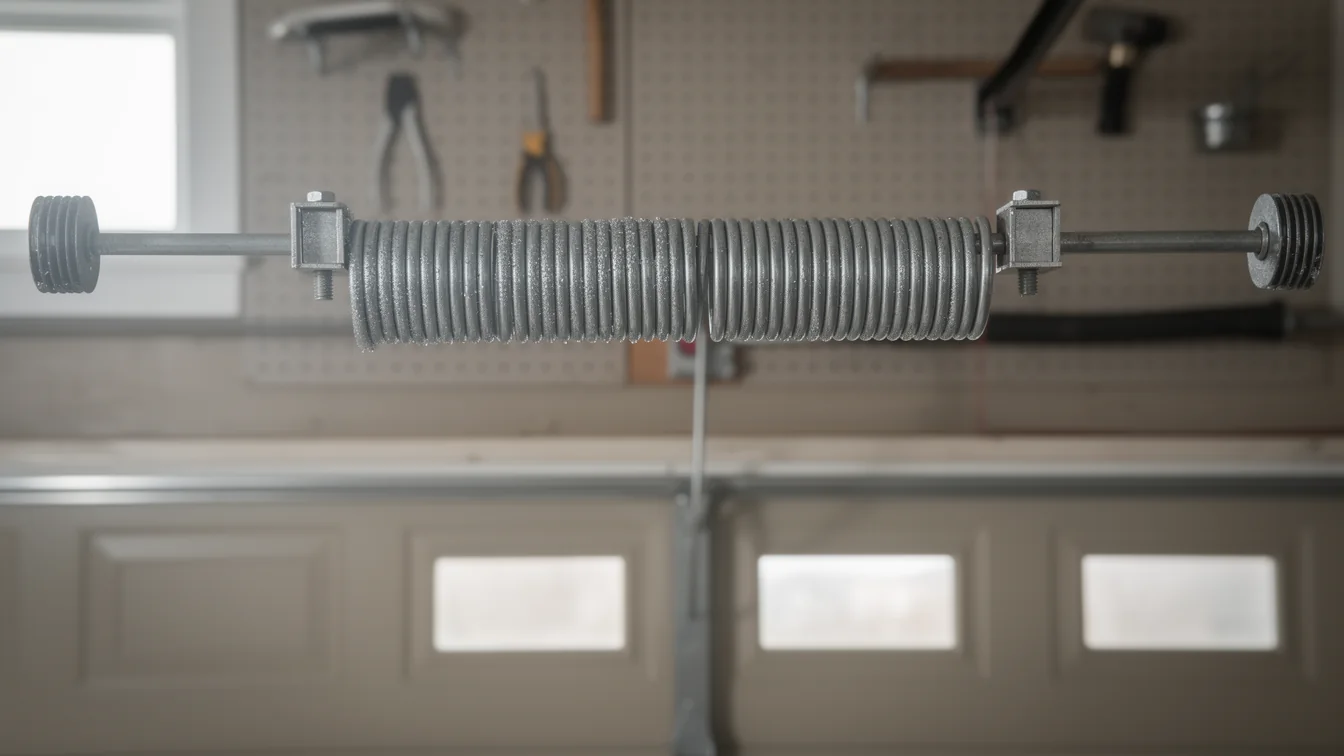
This area sits in a climate zone rated cold-severe, and cold is hard on spring steel specifically: the metal loses temper as it cycles through repeated freeze and thaw, and a spring that's been flexing since the 1970s doesn't have much fatigue life left when a January morning hits single digits. The door doesn't care that it's Tuesday - it cares that the steel got brittle overnight and the first lift of the day asked it to do what it's done ten thousand times before, except this time the coil's had enough. That's the mechanism, not a guess: cold steel plus decades of cycles is why winter spring calls cluster the way they do out here.
When Waiting Is Fine
Not every noise means trouble. A door that's a little slower to close on a 20-degree morning than it is in August is normal - the grease in the rollers and the opener's gearing both stiffen up in the cold, and that's not a failure, it's just physics. If the door still opens and closes under power, latches at the bottom, and the opener doesn't strain or reverse partway through, you can leave it until a milder day and just keep an eye on it.
Same goes for minor rust bloom on hardware - common on the older 1960s and 70s stock still in service around here - as long as the spring coils themselves aren't flaking or pitted where they bend. If you've got a double door and it's noticeably harder to lift by hand than it used to be, that's worth watching rather than panicking over; note the date and see if it gets worse over the next cold stretch. Waiting is also fine if the only symptom is a single startled bang from the garage on a cold night - that's often just the door seating itself as the metal contracts, not a part letting go.
When It Stops Being a DIY Job
A torsion spring under tension is storing enough energy to break a hand or worse, and cold makes that failure mode worse because the break tends to be sharper - brittle steel snaps rather than bends. If you hear a bang and the door won't lift, or lifts only a few inches before the opener strains, stop. Don't cut the cable, don't try to wind the spring down, and don't let anyone put a hand near the bottom panel while the other spring, on a double-spring door, might still be loaded.
This is also not a DIY repair on the original-era hardware common in houses built before the 1980s around here - winding cones and bar sizes from that period don't always match what's sold today, and a mismatched part under tension is how people get hurt. If the opener is cycling the door up and down repeatedly trying to find the limit, or the door comes off track on one side, that's a call, not a project for the weekend. We won't talk you through a cold-morning spring swap over the phone - that part of the job we do in person, every time.
The Situation
With median household income at $143,796 across the service area and a mix of original and updated garage doors on houses built anywhere from 1940 to 2015, the calls we get skew toward two extremes: owners replacing a worn spring on a door that's otherwise fine, and owners replacing the whole door because the torsion hardware is original and nothing on it is worth saving.
We don't push replacement when a spring swap will do - most of the houses in this part of the county only need the smaller fix. Where we draw the line is parts availability: some of the oldest cones and shafts from the earlier construction wave aren't stocked anywhere anymore, and when that's the case, replacement is the honest answer even if it costs more up front. If your garage door failed on a cold morning this winter, the odds are it's a spring, not the opener, and the fix is usually a same-visit job once we're looking at the actual coil. Get in touch and we'll tell you straight whether it's the spring or something bigger.
Frequently asked questions
Why do garage door springs break more in winter in McLean?
Steel loses flexibility as it gets cold, and this area sits in a climate zone rated cold-severe. A spring that's already decades old, as a lot of them are given the 1960s-70s housing stock around here, has less give left in it when temperatures drop, so the brittle winter morning is often what finally finishes a spring that's been fatiguing for years.
How old are most garage doors around McLean?
Housing in and around McLean was built mostly between 1940 and 2015, with the bulk of it going up in the 1960s and 70s and a median build year of 1977. A lot of garage doors and their torsion hardware are original to that era, which means older winding cones and shaft sizes that don't always match current stock.
Can I fix a broken spring myself to save money?
We'd rather you didn't. A torsion spring holds enough stored energy to injure someone, and cold makes the steel more likely to snap sharply rather than bend. On the older hardware common in this area, the parts also don't always match modern stock, so a DIY swap risks both a mismatched part and a bad injury.
My door is slow in the cold but still works - do I need a call now?
No. Stiff grease and a sluggish opener motor in cold weather are normal and not a sign of failure. If the door still opens, closes, and latches under power without straining, you can wait for milder weather. Call if it stops lifting fully, bangs and won't move, or comes off track.
Related garage door services in McLean
More garage door guides
Book garage door service in McLean
Call now or request a quote - tell us what the door is doing and where you are.