
McLean, VA · Garage Door Service
Garage Door Maintenance for Fort Hunt Homes
Fort Hunt's median household income tops $210,000, and most houses date to 1963 - old enough that torsion hardware needs a real look, not a squirt of oil.
- Repairs & new doors
- Springs & openers
- Serving 5 nearby communities
Parts We Carry
Fort Hunt's median household income runs north of $210,471, well above the broader McLean service area's $143,796. That number matters here more than it does elsewhere, because it changes the math on repair versus replace. A homeowner at this income level isn't stretching to cover a new torsion spring or a cable set - the question is whether the door itself, usually original or close to it since the house was built around 1963, still earns its keep, or whether a tune-up is just postponing a bigger bill.
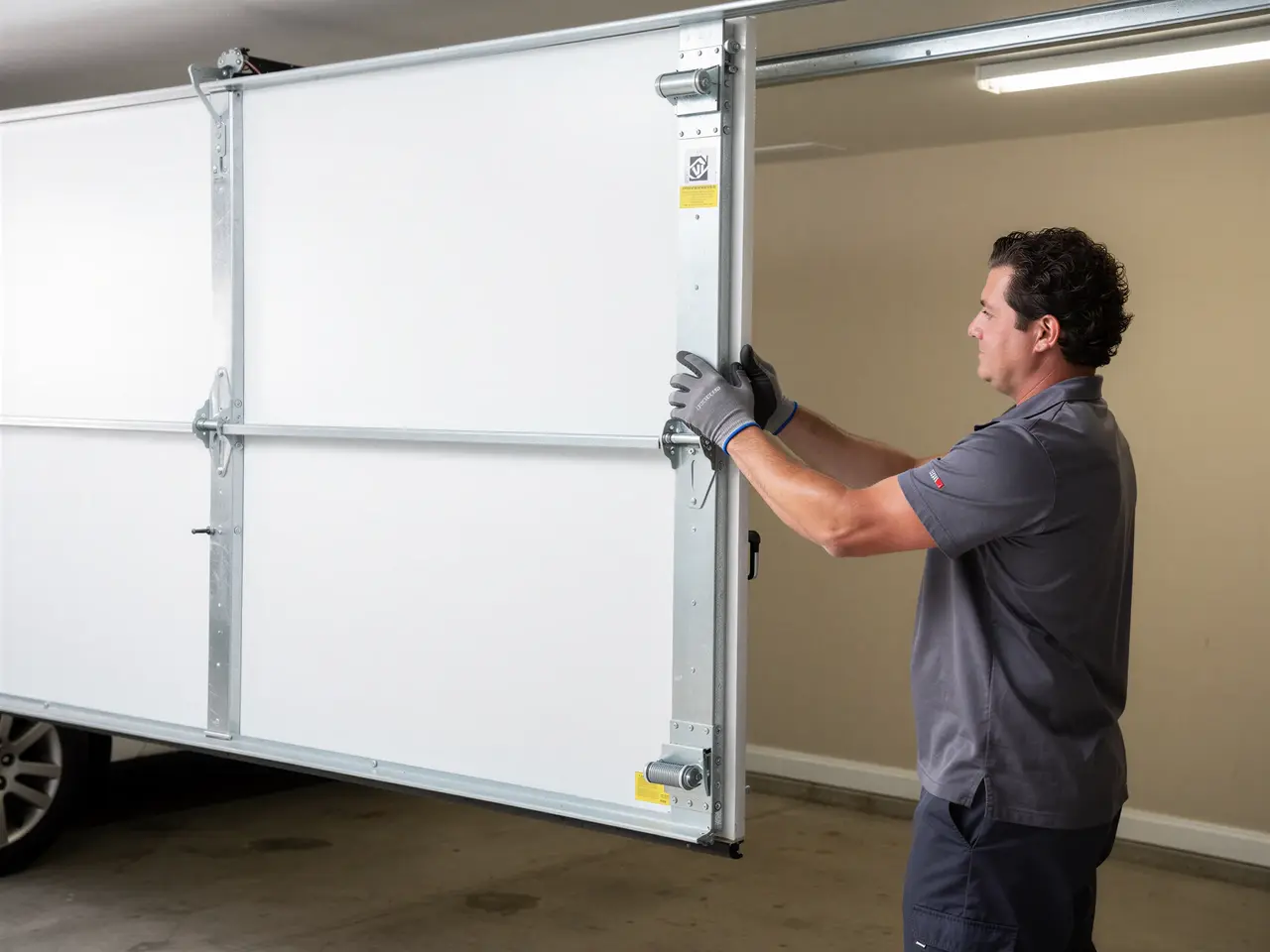
We carry the parts that fail on houses this age: torsion springs sized for single and double doors, extension spring sets, galvanized rollers, end bearings, and standard lift cables. What we don't always have on the truck is a replacement panel matched to an original 1960s door - those were painted steel in patterns nobody runs anymore, and ordering a cosmetic match can take longer than the repair itself. That's a straight lead-time problem, not a service one, and we'll tell you up front if a panel's on back order rather than quote a date we can't hit.
We come out of McLean, about 16 miles away, so a maintenance visit here is planned, not a drive-by. Good to know if you're trying to schedule around a weekend.
Doing It Yourself
Plenty of maintenance on a house this age is owner work. Vacuum the tracks, check that the photo-eye sensors aren't knocked out of alignment, and look at the weatherstripping along the bottom panel - on a door built when this neighborhood was going up, that strip has probably been swapped once or twice already and is due again given how cold-severe winters here work rubber seals loose.
What isn't owner work is the torsion spring. On a 1960s-era double door, that spring is wound under enough tension to break a wrist or worse if you back off the winding cone without the right bars. Lubricating hinges and rollers with a garage-door-specific lubricant (not WD-40, which washes grease out) is fine to do yourself twice a year. Tightening the lag bolts on the track brackets is fine too, as long as you're not forcing a bracket that's already pulled loose from the framing - at that point you're not tightening, you're re-anchoring, and that's a different job.
If the opener is original to the house, don't try to rewire the safety reversal system. That's a liability issue as much as a mechanical one, and it's the one place where a weekend fix can turn into a real problem for anyone standing under the door.
Time on the Job
A straightforward maintenance visit on one of these houses runs long enough to actually test everything - balance, travel limits, auto-reverse, cable wear, hardware torque - not just hit it with a grease gun and leave. Houses built around 1963 tend to have had at least one spring replacement and one opener swap by now, so the hardware isn't always matched: a newer opener bolted to an original track, or a replacement spring sized for a different door weight than what's actually hanging. Sorting that out takes longer than a cookie-cutter check on a house where everything's original to one install.
The severe cold winters this area sees also mean we're checking things a milder climate wouldn't flag - whether the door's insulation value still matches what the opener's motor was sized for, and whether cold has made the steel track brittle at the mounting points. None of that shows up in a five-minute look.
We don't pad the visit, and we don't rush it either. If the door's in good shape, we say so and we're done.
Where This Job Goes Sideways
The failure we see most on houses from this era is a spring that's been resized once already, often to match a heavier replacement door, without anyone recalculating the winding turns. It holds for a while, then lets go without warning, usually on a cold morning when the steel's least forgiving - which lines up with how this area's winters run.
The other one is a track bracket pulled loose from framing that's shifted slightly over sixty-plus years. You can tighten that bolt all day; if the wood behind it has moved, it'll walk loose again in a season. At that point the honest call is a new bracket mount, not another tightening visit, and we'll say that instead of billing you twice for the same symptom.
Where we draw a line: if a door's spring, cables, rollers, and opener are all near end of life at once, a maintenance visit isn't the right spend. We'll tell you that instead of nursing a door along part by part when a full replacement would cost less over two years than three separate repair calls.
Frequently asked questions
How often should a garage door in Fort Hunt get serviced?
Once a year is the baseline for most houses here, twice if the door sees daily use or the opener is original to the house. Given the severe cold winters this area gets, a fall check before the hardware has to work against ice and contraction catches more problems early than a spring-only schedule.
Is it worth maintaining an original 1960s garage door instead of replacing it?
Often yes, if the panel and track are sound and the failure is limited to spring, cable, or roller wear - all parts we stock. It stops making sense once two or three major components are failing at once; at that point a tune-up is a delay, not a fix.
Do you have a local office in Fort Hunt?
No. We run out of McLean, about 16 miles away, and schedule Fort Hunt visits as planned appointments rather than drop-ins. That means we ask for a window rather than promising an exact arrival time.
More garage door services in Fort Hunt
Book garage door service in McLean
Call now or request a quote - tell us what the door is doing and where you are.