
McLean, VA · Garage Door Service
Garage Door Maintenance for Burke's 1970s Housing Stock
Garage door maintenance in Burke, VA, where most doors date to the late 1970s. McLean Garage Door Pros services tracks, springs, and openers from 12 miles out
- Repairs & new doors
- Springs & openers
- Serving 5 nearby communities
What the Fix Involves
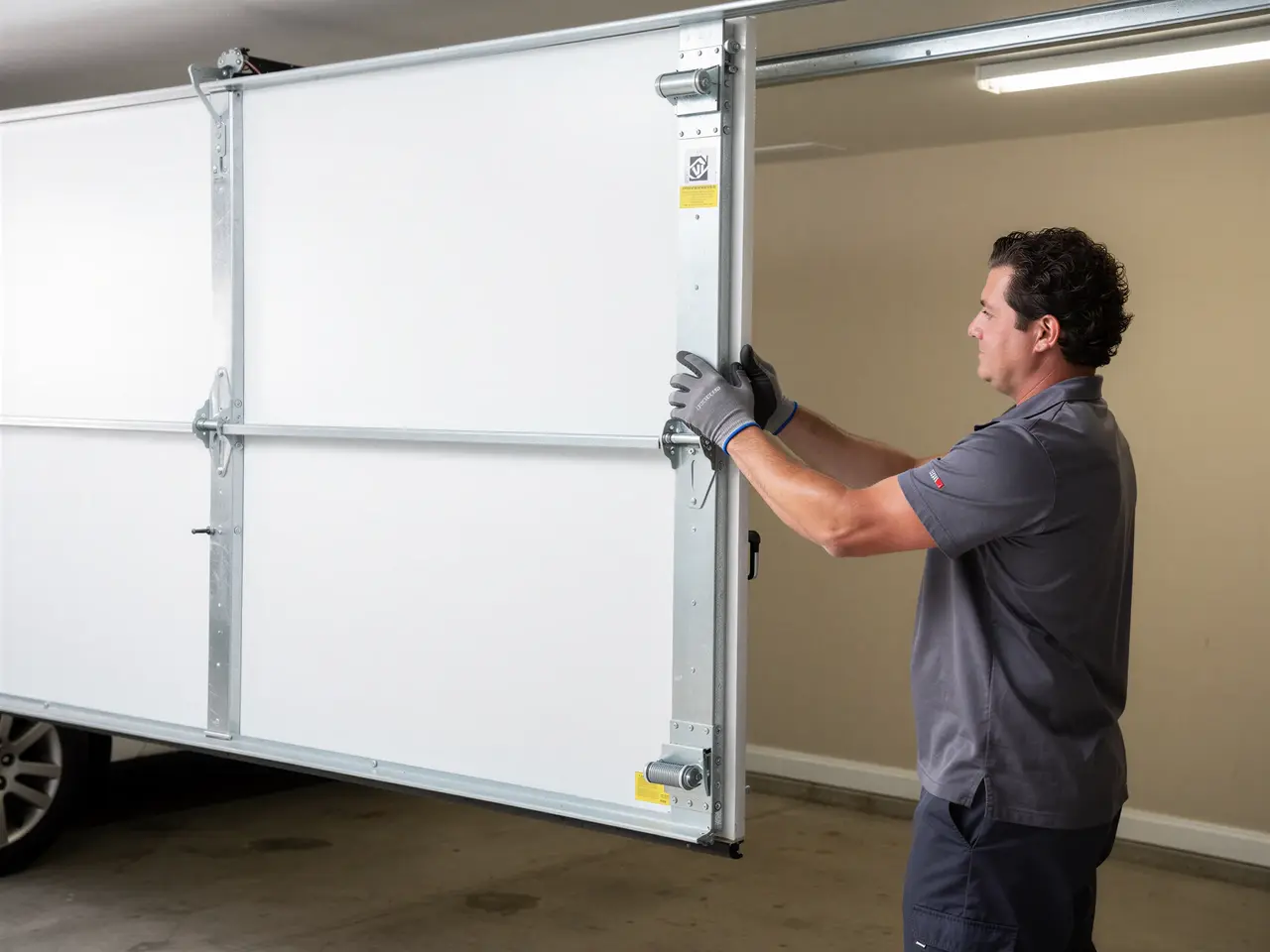
Most garage doors on Burke properties went up around 1979, and that date tells you what you're dealing with before you even look at the spring. These are steel sectional doors, usually raised-panel, hung on a standard 7-foot opening rather than the taller 8-foot openings you see in newer subdivisions. The steel is thinner gauge than what gets installed today, the hinges are riveted rather than the heavier stamped hinges on current doors, and the track is a narrower profile that doesn't always line up with hardware sold at the box stores now. A maintenance visit on a door like this isn't a generic once-over. It means checking the roller stems for the specific wear pattern that shows up on 40-plus-year-old steel, inspecting the torsion spring's winding cone for the kind of fatigue that doesn't look like damage until it fails, and checking whether the opener bolted to it is original or a later replacement bracket that doesn't quite fit the header. The goal of a tune-up on a Burke door isn't to make it look new. It's to get another several years out of hardware that was built before most of us owned a garage door opener with a safety reversal sensor.
Time on the Job
A maintenance visit on one of these older doors runs longer than it would on a door installed in the last ten years, mostly because there's more to check and more that's been painted over, rusted shut, or shimmed by a previous owner. Lubricating a modern nylon-roller door is close to a formality. Lubricating and adjusting a steel-roller door from the 1970s means working through hardware that's resisted movement for years, and that takes time whether the tech wants it to or not. We travel to Burke from McLean, roughly 12 miles each way, so the visit is scheduled rather than same-day walk-up. Once on site, the time split is usually weighted toward inspection rather than the actual lubrication and tightening - on a door this old, finding the one bolt that's backed out or the one cable strand that's starting to fray matters more than how fast the grease gun gets used. We don't quote a fixed visit length here because every one of these older doors carries a different repair history, and that history is what actually drives the clock, not the door's age alone.
Parts We Carry
Across the full service area - something like 267,392 households and 95,421 owner-occupied houses - the housing stock runs mostly 1960s and 1970s construction, so the rollers, cables, and spring sizes that fit a Burke door aren't oddball parts we have to special-order. They're the parts we stock because this era of door is common across the 41 communities we cover, not rare. What we carry on the truck covers standard torsion springs sized for 7-foot single and double openings, steel roller assemblies in the stem lengths these older tracks actually take, and galvanized lift cables sized for sectional doors of this weight class. What we don't always have on hand is decorative hardware or panel inserts matching a specific builder's original design from 1979 - those details varied by builder even within the same few years, and matching trim exactly sometimes means a longer lead time than matching the working parts. For a straight repair quote on a Burke door, see our <a href="/burke-garage-door-repair/">Burke garage door repair page</a>.
How It Shows Up
On a door built around 1979, trouble rarely announces itself as a dead opener first. It shows up as a scrape along one side of the track where the door's been walking slightly off-center for months, or a grinding sound on the way down that's the spring losing tension unevenly rather than failing outright. Steel rollers from this era wear into a flat spot rather than cracking the way plastic rollers do, so the noise builds gradually instead of appearing overnight. Owners on these older doors often describe the opener working harder than it used to - straining on the way up, or reversing partway for no clear reason - and that's usually the spring compensating for wear elsewhere in the system, not the opener itself failing. Given the severe cold this region sees in winter, steel contracts and hardware stiffens, so problems that were minor in October show up as a door that won't fully seat in January. That seasonal pattern is common on original hardware this age, and it's one more reason a fall maintenance check matters more here than on a five-year-old door.
Where This Job Goes Sideways
The honest limitation: on a door this old, maintenance sometimes turns up a problem that maintenance can't fix. If the torsion spring is at the end of its winding life, tightening and lubricating it buys a little time but doesn't reset the clock - and pushing a worn spring through another winter risks a cable snap instead of a clean fail. If the track has been bent from a bumped car or a sagging header over four decades, no amount of adjustment makes it run straight again. We'll tell you when that's the case rather than billing for a tune-up that won't hold. The other place this goes sideways is matching parts to an original 1979 installation where the builder used a track width or drum size that's since been discontinued - in those cases the honest fix is a partial hardware upgrade, not a like-for-like replacement, and that's a different conversation than a standard maintenance visit. We'd rather tell you that up front than have the door fail again in six weeks.
The Cost of This Job
We don't have a Burke-specific price list to publish here, so we're not going to invent a number. What we can tell you is what drives the cost on a door like the ones common in this area: whether the spring needs adjustment versus full replacement, how many roller assemblies have worn past the point of lubrication helping, and whether the cable or track needs attention beyond a standard tune-up. Burke's median household income runs well above the regional figure, and in practice that tends to mean homeowners here ask for the fuller tune-up rather than deferring to a patch job - but that's a choice, not a requirement, and a basic lubrication-and-adjustment visit is still the starting point for most of these older doors. For an actual number on your door, the repair page linked above is the place to start, or reach out directly so we can talk about what your door specifically needs before quoting anything.
Frequently asked questions
Why does my garage door from the 1970s make more noise than my neighbor's newer one?
Steel rollers from that era wear into a flat spot instead of cracking outright, so the grinding builds up gradually rather than appearing suddenly. It's a sign of wear, not necessarily failure, but it's worth having checked before the flat spot gets bad enough to bind the track.
Does McLean Garage Door Pros have a branch in Burke?
No. The company is based in McLean and travels to Burke, about 12 miles out, for scheduled visits. There's no local depot or walk-in counter here.
Will a tune-up fix a spring that's already failing?
Sometimes it buys time, but a spring near the end of its life will fail regardless of how well it's lubricated. If inspection shows the spring is close to done, we'll tell you that instead of billing for maintenance that won't hold through winter.
Can you match the original hardware on a door from 1979?
The working parts - rollers, cables, standard torsion springs - are common sizes we carry. Decorative trim or panel inserts specific to a builder's original design are harder to match exactly and sometimes take longer to source.
Book garage door service in McLean
Call now or request a quote - tell us what the door is doing and where you are.